
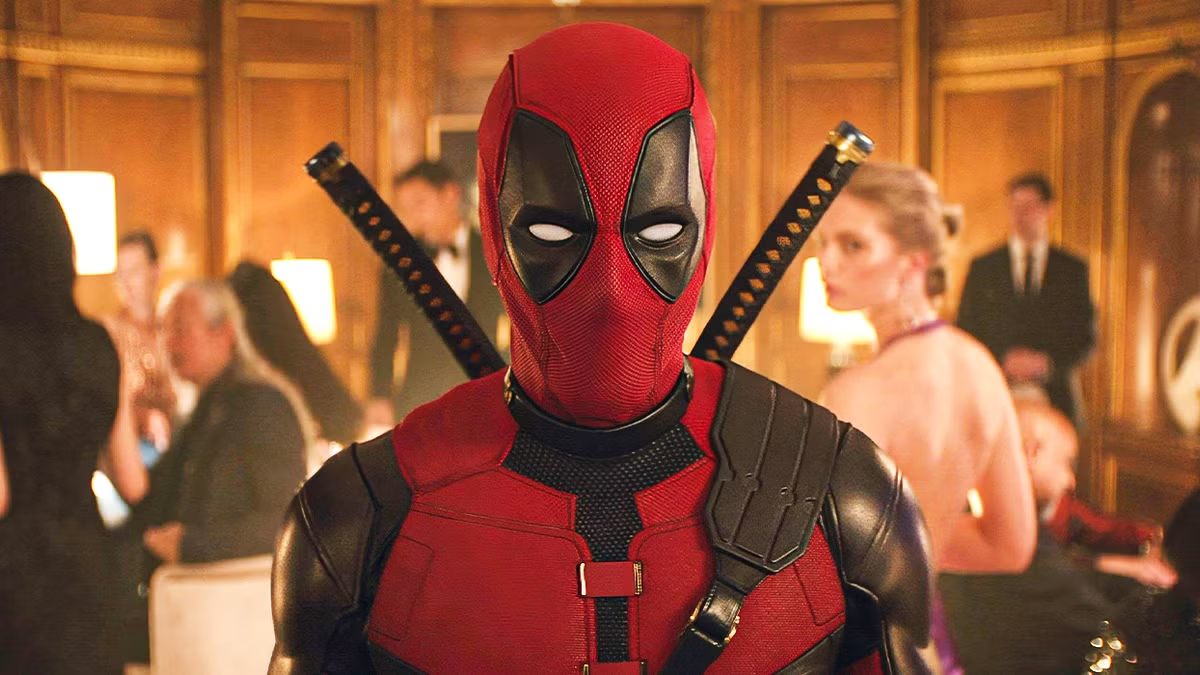
9/10 Deadpool VR: Why This Is More Than Just Another Superhero Tie-In
Intro
Licensed superhero games have a bad reputation—big names, thin gameplay, forgettable mechanics. VR makes that risk even higher. Deadpool VR doesn’t just avoid the trap. It sidesteps it completely.
Based on official gameplay reveals, early hands-on previews, and critical reception, Deadpool VR earns its 9/10 by doing something rare: designing for VR first, not bolting VR onto an existing formula.
VR-First Design, Not a Flat-Screen Port
Deadpool VR is built specifically for standalone headsets like Meta Quest. That matters. Instead of scripted animations, combat relies on:
- Physical aiming and reloading
- Spatial awareness
- Two-handed weapon handling
- Real-time enemy pressure
This immediately separates it from traditional superhero games that simply look better than they play.
Why it works: The game respects VR fundamentals—player movement, comfort settings, and tactile feedback—without dumbing down combat.
Combat That Rewards Skill, Not Button Mashing
Deadpool’s combat isn’t about flashy finishers. It’s about control. What players actually do:
- Manually reload under pressure
- Swap weapons mid-fight
- Use environmental cover
- Combine melee and ranged attacks instinctively
For competitive-minded players, this matters. The skill ceiling is mechanical, not cosmetic.
Comparison snapshot
| Feature | Typical VR Tie-In | Deadpool VR |
|---|---|---|
| Combat depth | Shallow | High |
| Physical interaction | Limited | Core mechanic |
| Player agency | Scripted | Emergent |
Writing That Understands Deadpool (and VR)
Deadpool lives or dies by writing. Here, it lands. The humor:
- Breaks the fourth wall without interrupting play
- Reacts to player behavior
- Avoids cutscene overload
Deadpool talks to you, not at you. That’s a subtle but crucial distinction in VR, where immersion collapses fast if pacing is wrong.
Comfort, Accessibility, and Smart Defaults
VR shooters often lose players to motion sickness. Deadpool VR doesn’t. From official documentation and previews, the game includes:
- Snap and smooth turning options
- Adjustable locomotion
- Seated and standing play
- Comfort-first default settings
Expert tip: The default comfort profile is conservative. Advanced players should tweak movement settings early to unlock faster combat flow.
Original Evaluation Framework: The “VR Tie-In Test”
Deadpool VR passes all four checks:
- Would this be fun without the license? Yes
- Does VR add mechanics, not just immersion? Yes
- Is humor integrated into gameplay? Yes
- Is player skill rewarded over time? Yes
Most licensed VR games fail at step two.
Common Mistakes New Players Make
- Treating it like a flat shooter
- Ignoring manual reload timing
- Leaving comfort settings untouched
- Overusing melee early instead of spacing enemies
This is a game that rewards adaptation.
FAQ
It’s a standalone narrative, not tied to a specific film timeline.
Yes, but mastery requires VR shooter experience.
Comfort options and pacing suggest it’s designed for extended sessions.
No multiplayer focus—but mechanically demanding enough for hardcore players.
Yes, based on current official announcements.
Conclusion: Why the 9/10 Is Earned
Deadpool VR succeeds because it doesn’t rely on Deadpool alone. Strong mechanics come first. Humor follows. VR isn’t a gimmick—it’s the foundation.
If you care about:
- Skill-based VR combat
- Smart licensed games
- VR that respects player intelligence
This isn’t just worth playing. It’s worth paying attention to.
Next step: If you own a Quest headset, this is one of the clearest examples of how licensed VR games should be built.