
Baby Steps Gets 9/10 on IGN: The Rage Game That'll Make You Hate Yourself
Games built around frustration aren't new — but every few years, one comes along that sparks real conversation. Baby Steps, a physics-driven walking simulator with intentionally awkward controls, is drawing attention after strong critical reception, including high praise from major outlets. Here's what makes it stand out — and whether you should dive in.
What Is Baby Steps?
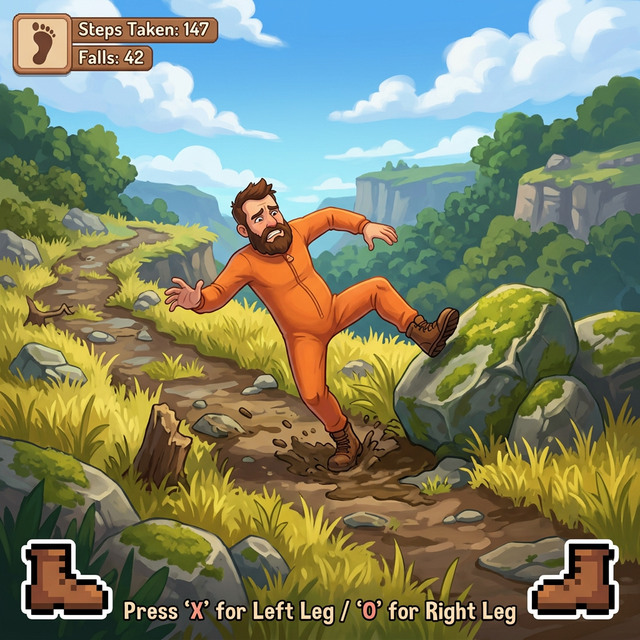
Developed by Bennett Foddy (known for notoriously difficult games) alongside collaborators, Baby Steps centers on a simple premise: you control each leg independently to walk across rugged terrain.
That's it — and that's the challenge.
The design philosophy echoes earlier physics "rage games" where failure is part of the experience, not a punishment.
Why Critics Are Praising It
Coverage from gaming outlets highlights several strengths:
- Emergent comedy from unpredictable physics
- Open environments encouraging experimentation
- A sense of genuine accomplishment after small progress
- Unique control scheme rarely seen in modern games
Some reviewers emphasize its humor and novelty, while others note the frustration may not appeal to everyone — a common divide with games in this genre.
How It Compares to Other Rage Games
| Game | Core Mechanic | Difficulty Style |
|---|---|---|
| Getting Over It | Precision climbing | Punishing setbacks |
| QWOP | Limb control | Chaotic physics |
| Baby Steps | Walking simulation | Slow mastery |
The key difference: Baby Steps leans into exploration rather than constant failure loops.
The "STUMBLE" Survival Framework (Original)
If you're jumping in, use this mindset:
- S — Slow down: Rushing causes most falls
- T — Tiny goals: Focus on the next few steps
- U — Understand terrain: Slopes change movement physics
- M — Manage frustration: Breaks help reset focus
- B — Balance inputs: Gentle adjustments beat overcorrection
- L — Learn patterns: Repetition builds muscle memory
- E — Expect setbacks: Progress isn't linear
Common Mistakes New Players Make
- Treating it like a traditional platformer
- Overcorrecting movement inputs
- Ignoring camera positioning
- Playing while frustrated — which compounds errors
Who Will Love (or Hate) It
You'll enjoy it if you:
- Like experimental indie games
- Enjoy high-skill challenges
- Appreciate emergent gameplay humor
You may bounce off if you:
- Prefer fast progression
- Dislike trial-and-error mechanics
Why Rage Games Keep Thriving
Academic discussions around challenge-based game design suggest that overcoming difficulty triggers strong satisfaction loops — often called "competence motivation" in game psychology literature. That's part of why games like this attract dedicated communities despite — or because of — their difficulty.
FAQ
Yes — mastery comes slowly, and mistakes are common.
It shares the frustration-driven design but focuses on walking physics.
The emphasis appears to be on gameplay rather than narrative.
It's led by developers known for physics-heavy experimental titles.
If you enjoy skill-based challenges, it's likely worth trying.
Conclusion — Should You Try It?
Baby Steps looks poised to join the lineage of memorable frustration games — the kind you complain about while secretly wanting one more attempt. If you're curious, go in with patience and a sense of humor. That's half the battle.