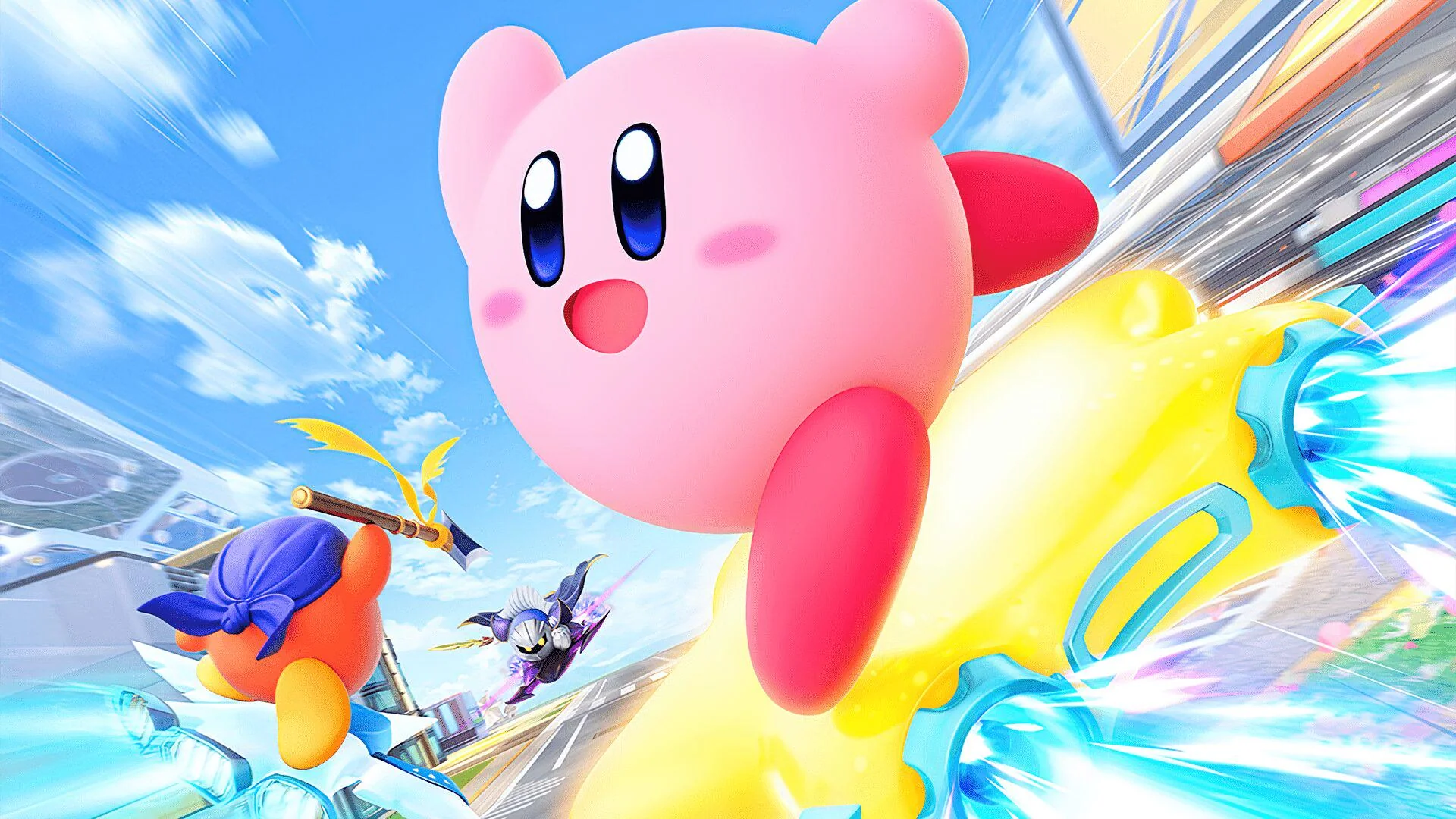
Kirby Air Ride: Frantic Racing Despite Odd Controls
Intro
At first touch, Kirby Air Ride feels broken. One button to accelerate. Let go to brake. No manual steering in the traditional sense. For many players, that’s a deal-breaker. And yet, two decades later, the game still has die-hard fans, local multiplayer legends, and a competitive niche that refuses to fade. This is why the controls didn’t kill the game—and might actually be the reason it works.
What Makes Kirby Air Ride “Unconventional”
Released on the Nintendo GameCube, Kirby Air Ride stripped racing controls down to the bare minimum.
- One button: accelerate
- Release: brake / charge
- Steering handled largely by physics and track design
This wasn’t a limitation. It was a deliberate design choice by Masahiro Sakurai, aiming for accessibility over simulation. Critics at the time were split. Some called it shallow. Others saw it as elegant.
Why the Controls Actually Work
Here’s the thing: Kirby Air Ride isn’t about mechanical precision. It’s about decision timing. What players actually manage:
- When to boost
- When to release and charge
- How to use terrain, ramps, and rails
- Positioning relative to rivals
Once you stop fighting the controls, the game opens up. Speed management replaces button mastery.
The Real Star: City Trial Mode
If standard races don’t convince you, City Trial usually does. In this mode, players explore an open city, collecting power-ups before a random end challenge is revealed. Why it works:
- Builds tension through uncertainty
- Rewards map knowledge over reflexes
- Encourages risk vs reward decisions
City Trial is why Kirby Air Ride still gets mentioned in “bring it back” conversations.
Competitive Depth (Yes, Really)
Despite its simple inputs, the game has a skill gap. High-level play revolves around:
- Optimal charge release timing
- Drafting behind opponents
- Machine-specific handling quirks
- Track memorization
It’s not esports in the modern sense, but it’s far from random.
Quick-Start Skill Framework (Original)
If you want to improve fast:
- Stop holding accelerate constantly
- Learn when to release on corners
- Practice boost timing, not racing lines
- Play City Trial to understand machines
- Watch how momentum carries—not how fast you press
Common Mistakes New Players Make
- Treating it like Mario Kart
- Ignoring charge mechanics
- Overvaluing top speed machines
- Skipping City Trial entirely
This isn’t a drift racer. It’s a momentum game.
Why It Still Matters Today
With party racers leaning toward complexity again, Kirby Air Ride stands out as a reminder that depth doesn’t require buttons—it requires design clarity. Its influence shows up in modern minimalist control schemes and party-focused multiplayer design.
FAQ
Yes, but mastery takes time despite simple controls.
Because it mixes exploration, randomness, and strategy better than most party modes.
Yes, small but dedicated communities still run events.
Mechanically, yes. Visually, it shows its age.
Nintendo has never given an official reason.
Conclusion
Kirby Air Ride proves that unconventional controls don’t automatically mean bad design. By shifting focus from execution to timing and awareness, it created a racer that feels chaotic, accessible, and quietly deep. If you bounce off it early, that’s normal. Stick with it—and it clicks.
Next step: replay City Trial with intention. That’s where the game reveals itself.