
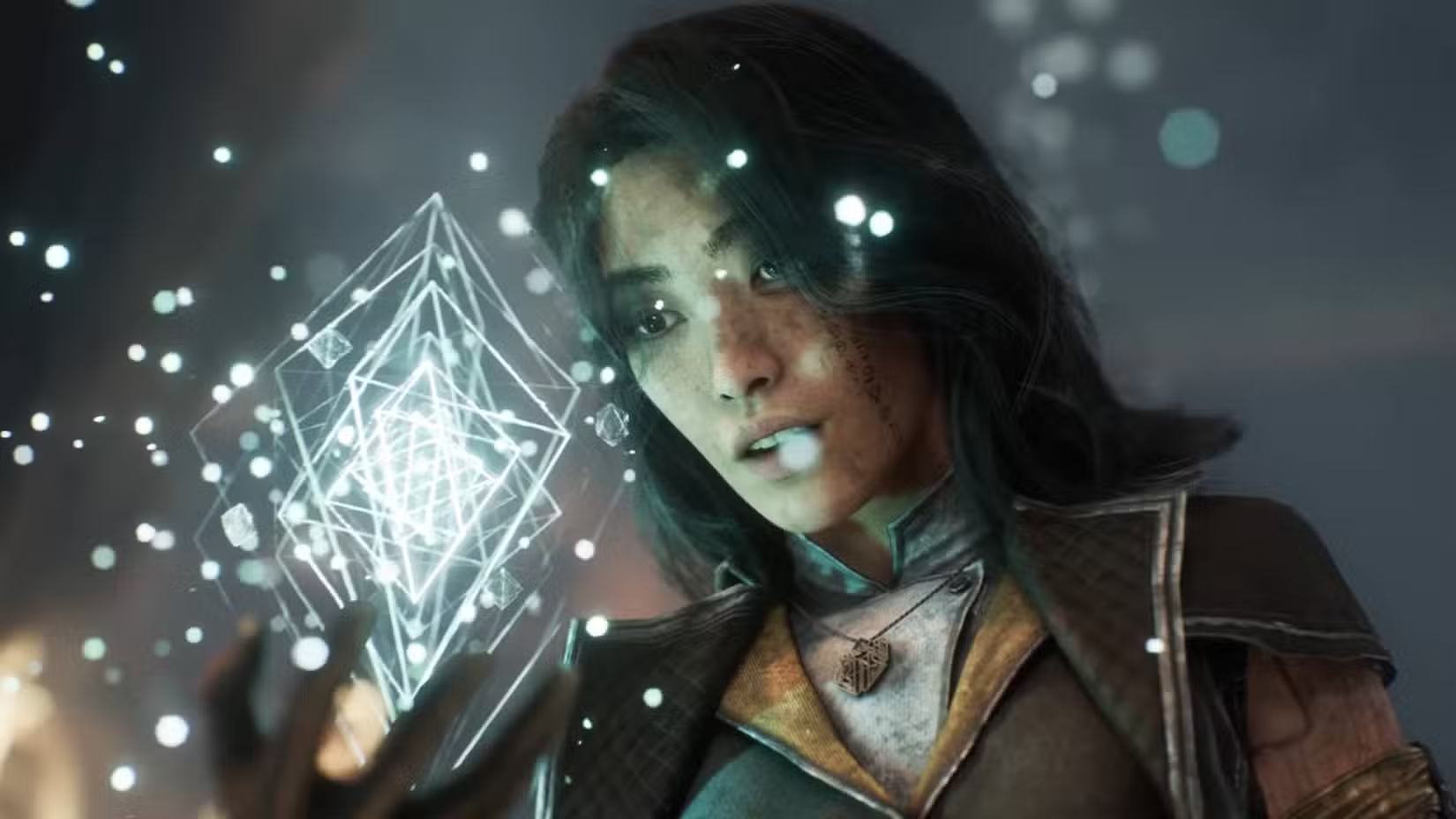
Why We Limited Our GOTY List to Just 12 Games This Year
Every December, the internet fills with Game of the Year lists. Some include 20 games. Others stretch to 50.
But bigger lists don't always mean better ones.
This year, we made a deliberate decision: our GOTY shortlist would include just 12 games. Not 15. Not 20. Exactly twelve.
The reason is simple. A shorter list forces sharper choices. It highlights truly exceptional games instead of rewarding everything that was merely good.
Here's how we arrived at that number—and why we think it leads to a stronger list.
The Problem With Massive GOTY Lists
Modern gaming releases hundreds of titles every year.
According to industry tracking sites like SteamDB and market reports from Newzoo, thousands of games launch annually across PC, console, and mobile platforms.
That scale creates a problem: if a GOTY list includes dozens of titles, the award starts losing meaning.
Large lists often include games that were:
- Good, but not groundbreaking
- Popular, but not technically impressive
- Important culturally, but not exceptional in design
A shortlist forces editors to answer a harder question:
Which games actually pushed the medium forward this year?
Why We Chose the Number 12
Twelve isn't random.
It's large enough to represent multiple genres, but small enough to maintain real competition.
Our shortlist structure typically allows space for:
| Category | Typical Slots |
|---|---|
| AAA blockbuster titles | 4–5 |
| Innovative indie games | 3–4 |
| Competitive / esports titles | 1–2 |
| Narrative or experimental games | 1–2 |
This balance keeps the list diverse without becoming bloated.
Industry awards often use similar shortlists. For example, many categories at major events shortlist 5–10 nominees, not dozens.
Our GOTY Evaluation Framework
To make the process consistent, we rely on a scoring framework rather than pure opinion.
Each game is evaluated using five core criteria.
1. Gameplay Innovation
Did the game introduce new mechanics
or refine existing ones in meaningful ways?
Examples include:
- novel combat systems
- creative level design
- unique player interaction systems
2. Technical Execution
This includes:
- performance stability
- visual design
- animation quality
- optimization
Technical polish matters. A brilliant idea loses impact if the game runs poorly.
3. Player Impact
We also consider community response.
Signals include:
- player retention
- esports adoption
- modding communities
- streaming popularity
Some sources disagree on how much weight this should carry. Some critics
prioritize design quality over popularity.
Our approach blends both.
4. Narrative or World Building
Not every great game needs a
story. But when storytelling works, it elevates the experience.
We evaluate:
- character depth
- environmental storytelling
- emotional impact
5. Long-Term Influence
This is the hardest metric to judge.
We ask:
Will other games copy this idea next year?
If the answer is yes, the game probably deserves serious consideration.
The Shortlist Decision Process
After scoring dozens of games, the list goes through a final editorial discussion.
The process looks like this:
Step 1 — Initial scoring
Editors evaluate releases across
multiple platforms.
Step 2 — Top 25 shortlist
Highest scoring titles advance.
Step 3 — Editorial debate
We discuss edge cases and genre
balance.
Step 4 — Final 12 selection
The strongest games remain.
Limiting the final list ensures each game truly deserves its place.
Expert Tip
Some of the most influential games in history started as smaller projects. That's why indie titles are always considered alongside major releases.
Common Mistakes in GOTY Lists
Many gaming lists fall into predictable traps.
Popularity bias
Big franchises dominate coverage even when
smaller games innovate more.
Release timing bias
Games released late in the year often receive
more attention.
Genre bias
Competitive games, strategy titles, and simulations
sometimes get overlooked.
A smaller shortlist helps reduce these biases.
FAQ
Because a shortlist highlights the most exceptional releases. Including too many titles weakens the meaning of the award.
Most outlets evaluate gameplay design, technical performance, creativity, storytelling, and overall impact.
Not always. Player communities often favor competitive or multiplayer titles, while critics sometimes prioritize artistic design.
Yes. Many influential titles come from independent studios and are frequently shortlisted.
Each publication uses slightly different criteria and editorial perspectives when evaluating games.
Conclusion
A Game of the Year list should celebrate the titles that truly defined the gaming landscape.
Limiting the shortlist to twelve forces careful evaluation. It encourages debate. And it ensures every selected game genuinely stands out.
In a year filled with hundreds of releases, that kind of focus matters.
Because the best games deserve more than a long list—they deserve a real spotlight.